
Peter Lovesey
I’ve really wanted to write something about the late Peter Lovesey, the great mystery writer who passed in April, for a long time, and I haven’t been able to find my way in. I finally have the seed for it now—if you’ll just bear with me.
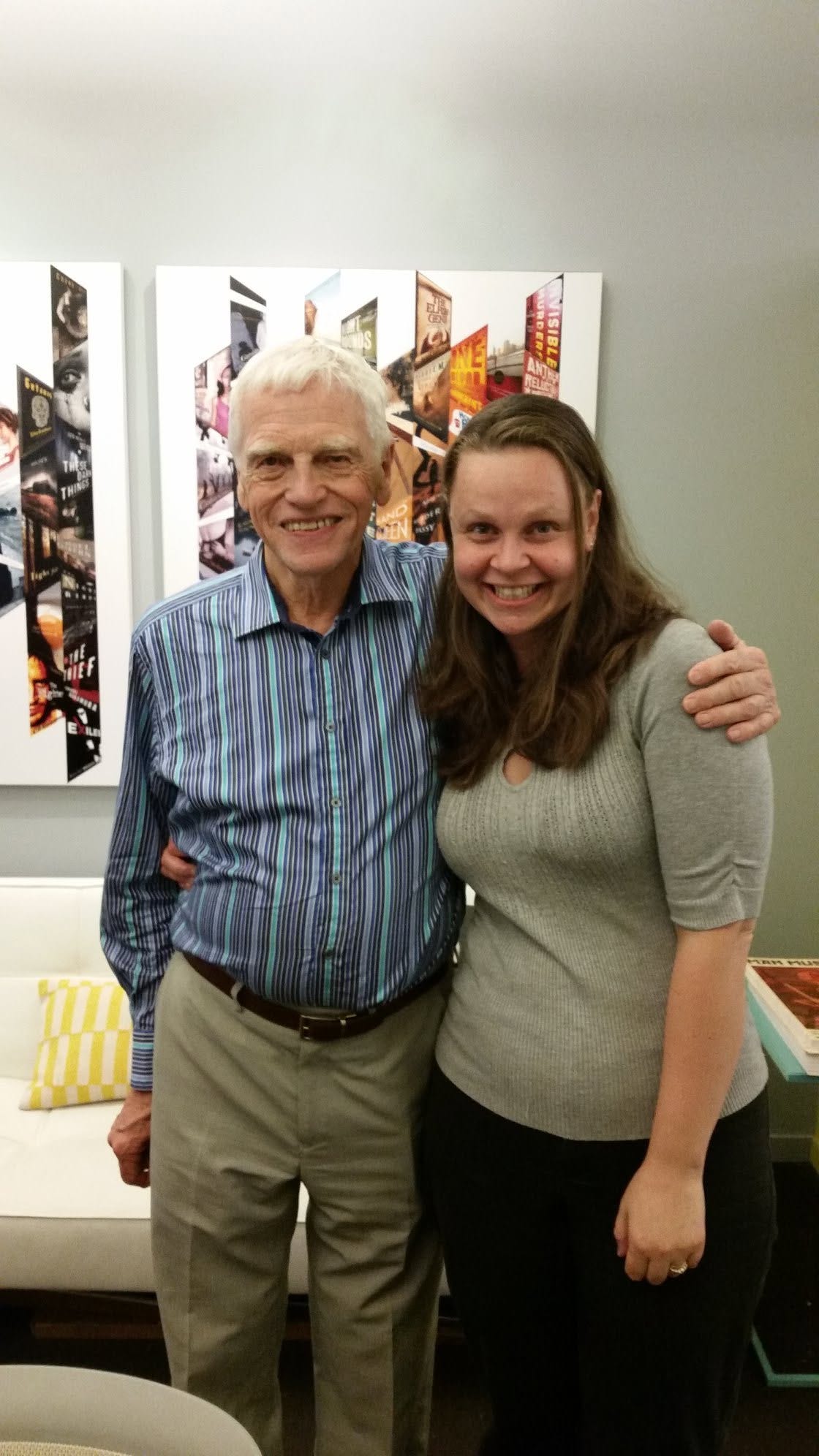
Peter Lovesey is a mystery genre Greatest of All Time candidate, one of very few authors who have been awarded both the Mystery Writers of America Grand Master Award and also the (UK) Crime Writers Association Diamond Dagger Award for Lifetime Achievement. (You probably know this about me already, but just in case: my “day” job is I’m the editorial director at Soho Press, where I’ve been editing crime fiction since 2010. I had the privilege of being Peter’s editor for the last fifteen years of his career.) Over 55 years of publications, he mastered and developed the detective novel, carrying the torch for the Golden Age puzzle mystery and innovating the historical mystery. The value of his contributions have become fuzzy in the rearview mirror—the historical puzzle mystery feels like such an established genre that one must be reminded that it was not back in 1970, when Peter published Wobble to Death, a Victorian-era police procedural set in the strange and specific sporting world of race-walking.
Peter was recognized as the consummate plotter, adhering to Golden Age rules (delivering fair-play clues throughout the narrative in a way that allows the reader to, potentially, crack the case alongside the detective if they’ve been reading carefully; no withholding information)—I will speak as both a career editor and an aspiring practitioner of the fair play mystery and say that this is actually a very difficult feat to pull off.
Peter passed away in April at age 88 after a two-year battle with pancreatic cancer. When I first learned about his diagnosis, in March of 2023, I cried messily into my keyboard—rereading his message now brings it back pretty quickly. He told me with his classic gentle voice and stiff upper lip that he’d led a charmed life and that the way to “earn a big virtual hug from me” would be to not comment sympathetically on this situation; he had work to do, complex affairs to sort out and a half-finished book he really hoped to finish, and he didn’t have time to feel sorry for himself. As it turned out, I was graced with another two years of his friendship. He did indeed finish the book he was working on—the conclusion to the Peter Diamond detective series, which is set in Bath; the book is called Against the Grain—and we (at Soho) even pulled off its publication before he passed (it came out in December 2024).
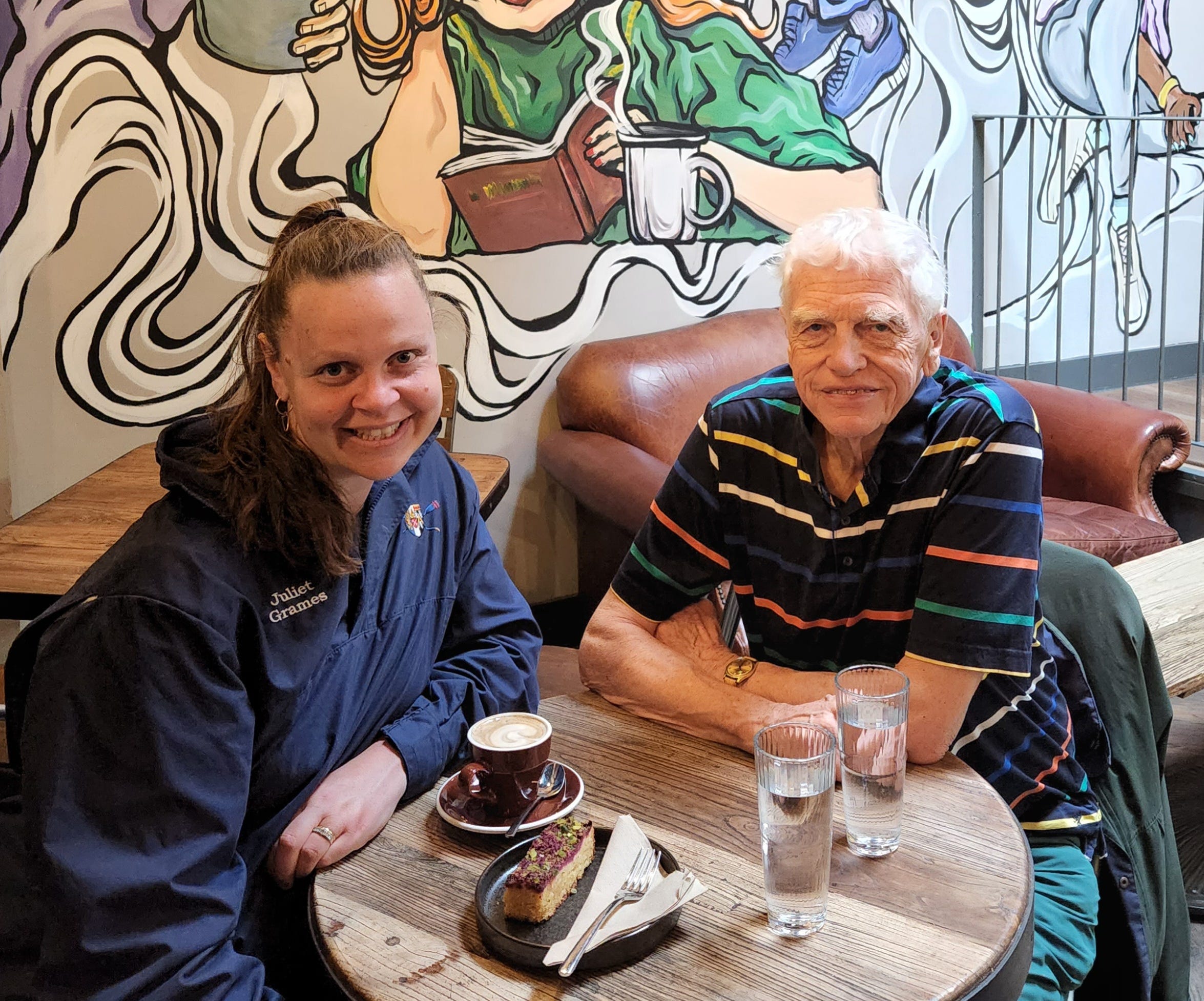
When you work with someone for fifteen years, they of course become a pillar in your mind’s view of your world. The relationship between a writer and an editor is specifically intimate, too; if you’re a writer, you know how deeply personal the text you generate feels to you, and so if someone (an editor) is going to be allowed to go in there and rummage around with it, you have to be able to trust them not to get you wrong. I’ve been on both ends of this equation; I testify to the sense of vulnerability and spirit-testing of the editorial process. Over the 13 books of his I edited, I came to hold Peter in the greatest esteem not only as a writer but as a person.
Peter was a modest, kind, and extremely correct man, the kind who valued and presented integrity of character over all other qualities. He was a man ahead of his time in many ways; his nimble mind was always open to the human experience, and I never knew him to put a foot wrong on any point. He also had led a fascinating and unorthodox life. I’d gleaned dribs and drabs of his biography from our conversations over the years—the Blitz bombing that almost killed him when he was 8; the newspaper ad for a writing contest that had changed his life; the typically strange vicissitudes of his Hollywood career; the unusual and inspiring shape of his family life—but I’d known him only in his later, relatively staid era, when he wrote a mystery novel a year (unless he chose, mid-stream, to chuck one out—unlike most successful genre novelists of his stature, Peter never sold a novel on proposal, because he always reserved the right to decide his work wasn’t up to his own standard). I had heard enough to know I wanted to fill in the holes.
In 2022, I had an excuse to fly to England for a college reunion, and I wrote to him to ask him if he’d subject himself to some formal conversations with me so I could tape him talking about his life and work. Peter characteristically expressed doubt that he’d have anything interesting to tell me, but agreed, and for three days put me up in his pretty house in Shrewsbury. He was 86 at the time, so we were both aware this might be the only window for such a project. His wife of 65 years, the artist Jax Lovesey, warmly tolerated my interloping, and joined us for a coffee and cake outing each afternoon. Peter and I taped 8 hours of interviews, which I’ve played through for myself twice since for solace.
We also made a pilgrimage to Shrewsbury Abbey, home of Ellis Peters’s Brother Cadfael (the mystery series that first got me into mysteries, thanks to my paternal grandmother, back when I was 10). Peter’s Victorian-set Sergeant Cribb series predated Peters’s A Morbid Taste for Bones by 7 years—I had realized, belatedly, that one of my own authors had contributed to the popularization of the historical mystery that paved the way for Brother Cadfael, who had roped me into a life of crime in the first place. I had never seen the circle before.
The lessons I took from our tapes—about crafting a detective novel; about being a working writer and juggling contract gigs with family responsibilities; about balancing labor with vision and all that with Time—are not material for a newsletter; I am still mulching them and learning from them, but (as I told Peter at the time) they are research for some bigger study of character. (In both senses.) But I’ll share (and reshare etc) one of the most mysterious aspects of Peter Lovesey: his method for writing a novel.
As he described it to me:
Every morning, he would rise early and begin work around 6. He would put in several hours, then prepare breakfast for himself and Jax, who has a medical condition that has rendered her mostly non-ambulatory. After cleaning up the kitchen, write for another 3-4 hours, then break for lunch. He would go for an outing—with Jax to a cafe, or on a walk—then return and work another 3-4 hours, bringing him around to sunset. Each day he would log at least 8 hours of work on a novel, diligently, without exception.
And what would 8 hours of labor yield? 200 words, if he was lucky perhaps 250. Perhaps one or two pages of text. “I’m afraid I’m just not very fast,” he told me.
This was mind-boggling to me—a very standard achievement threshold for most working writers is 1000 words a day (4-5 times Peter’s goals). But the catch: Peter never went back. He couldn’t explain to me how his mind worked, but after that belabored writing, he never self-edited; “Once I’ve set it down it’s pretty much done.” And I will vouch that our editorial process never involved mistake-fixing; I don’t know how he did it. The most dramatic change I might ask him to make would be something like “Can we get more clarity of character motivations in chapter 8?” and he’d add a line or two and thank me gratuitously for my (non-)contribution. Honestly, he left me so little to do; I was basically a glorified flap copy writer. The palace of his mind—the product of those faithful 8-hour daily ruminations—must have been the most organized, opulently furnished of fictional homes for his stories.
He was one of a kind, in this way and others.
*
I just got home from a trip to the UK, where I attended the Crime Writers Association’s Dagger Awards banquet. This year Mick Herron, an author I’ve had the great privilege of editing since his second Slough House novel, Dead Lions, was receiving the Diamond Dagger Award for Lifetime Achievement. (You’re already watching Slow Horses, starring Gary Oldman, Kristin Scott Thomas, and Jack Lowden, on Apple TV, right?)
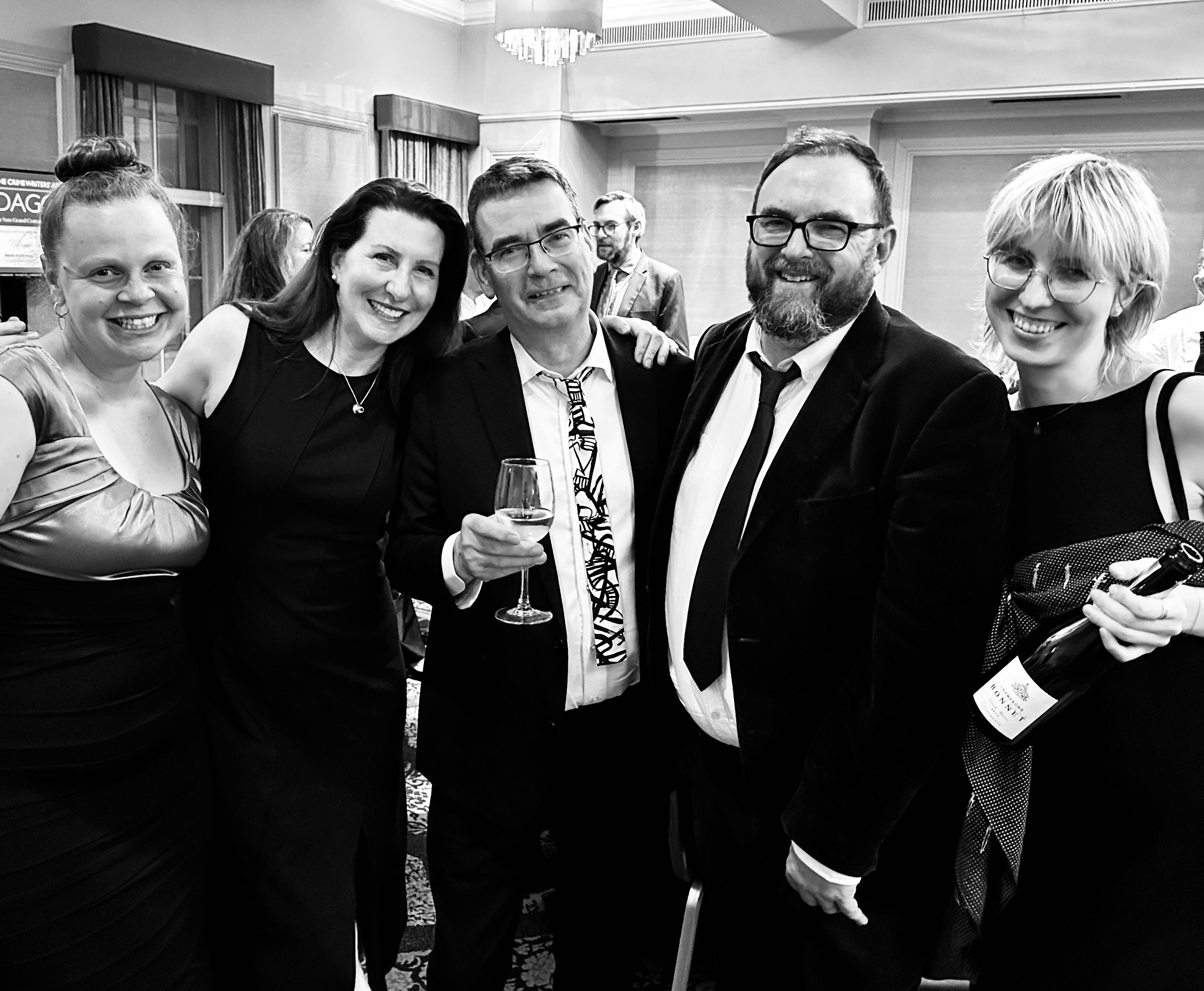
(Two other Soho authors were up for Daggers, as well—Stuart Neville, for the Steel Dagger for Thriller for his ripping mother-daughter vampire novel Blood Like Mine, and Akira Otani, who won the International Dagger for her gender-interrogating yakuza crime novel, The Night of Baba Yaga, translated by Sam Bett.)
When Mick got up on stage to accept his award, he kept his remarks very short—gracious and eloquent thanks for his publishing teams, and then an exhortation to his fellow crime writers to remember the importance of libraries—and finally he concluded with a tear-inducing remembrance of Peter Lovesey, beginning by reading the letter Peter, a Diamond Dagger recipient himself, had sent Mick when he’d heard the news. One piece of good news in a rotten news year.
Mick’s spending his moment of glory on Peter was typically generous, but I’m so grateful—relieved?—that he did. I’ve been thinking about this since April, since Peter passed—that no amount of remembrance ever feels like enough. Hearing Mick’s speech—Mick’s gift to the memory of Peter Lovesey of what should have been his own celebration—was the first moment I felt any sense of catharsis, or (is this the right word?) satisfaction. I guess I’m learning, in my rapidly advancing middle age, that in grief grand gestures help.
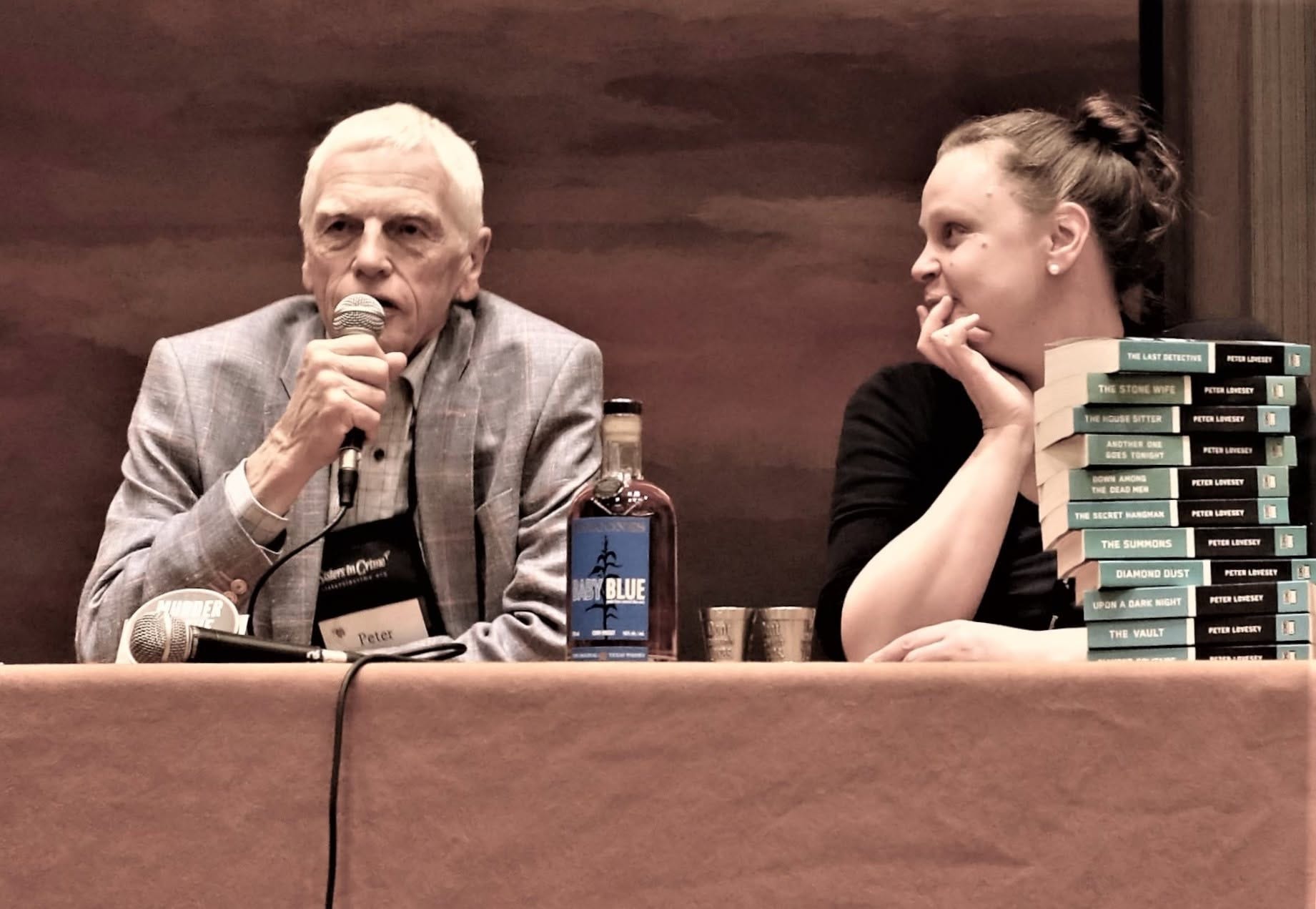
I don’t have a grand gesture to make myself; I’ve already used up my chips. I was able to dedicate a paragraph in The Lost Boy of Santa Chionia to Peter, and, despite the risks, was rewarded with the knowledge that Peter read the book before he passed. “Such a richly textured, beautiful written novel,” he wrote to me in September 2024. “You’re a major writer. Of course I’m torn, because selfishly I don’t want to lose you as my editor, but I think at some point soon you owe it to the future of the American novel to go full time.” This level of flattery must obviously be demurred and kept private (unless one copies it into one’s newsletter sent to one’s trusted intimate subscription readers) but I’m not going to pretend that his wasn’t THE good opinion I was seeking when I set out with my hammer and chisel to carve out that puzzle plot.
In his last month, Peter and I were trading emails—he wrote to tell me he was fading in and out, and so to close out our relationship with a warm goodbye. He had never commented on the dedication paragraph I’d left him in the author’s note—was that because he was being typically circumspect, or was it because he (like most readers) hadn’t bothered to plow through the backmatter? I toiled over the question of whether to draw his attention to it—it seemed so vulgar (look at me performatively appreciating you in public!) but on the other hand I couldn’t bear to think he might miss it. In the end I couldn’t control myself and I pointed him to page 398. Disgraceful, but I’m glad I did. He had not seen it. His reply, his last message to me, was “I’m blessed to have such a wonderful editor.” He controlled his own exit to be of gentlest impact to us all.
Peter is a role model to me in so many things. The unrelenting commitment to character is my greatest aspiration; I fall very short every day, but his example will always be a beacon on my horizon.
Thank you for letting me share that. If you’d like to discover some of Peter Lovesey’s novels, here are some suggestions, depending on what you like.
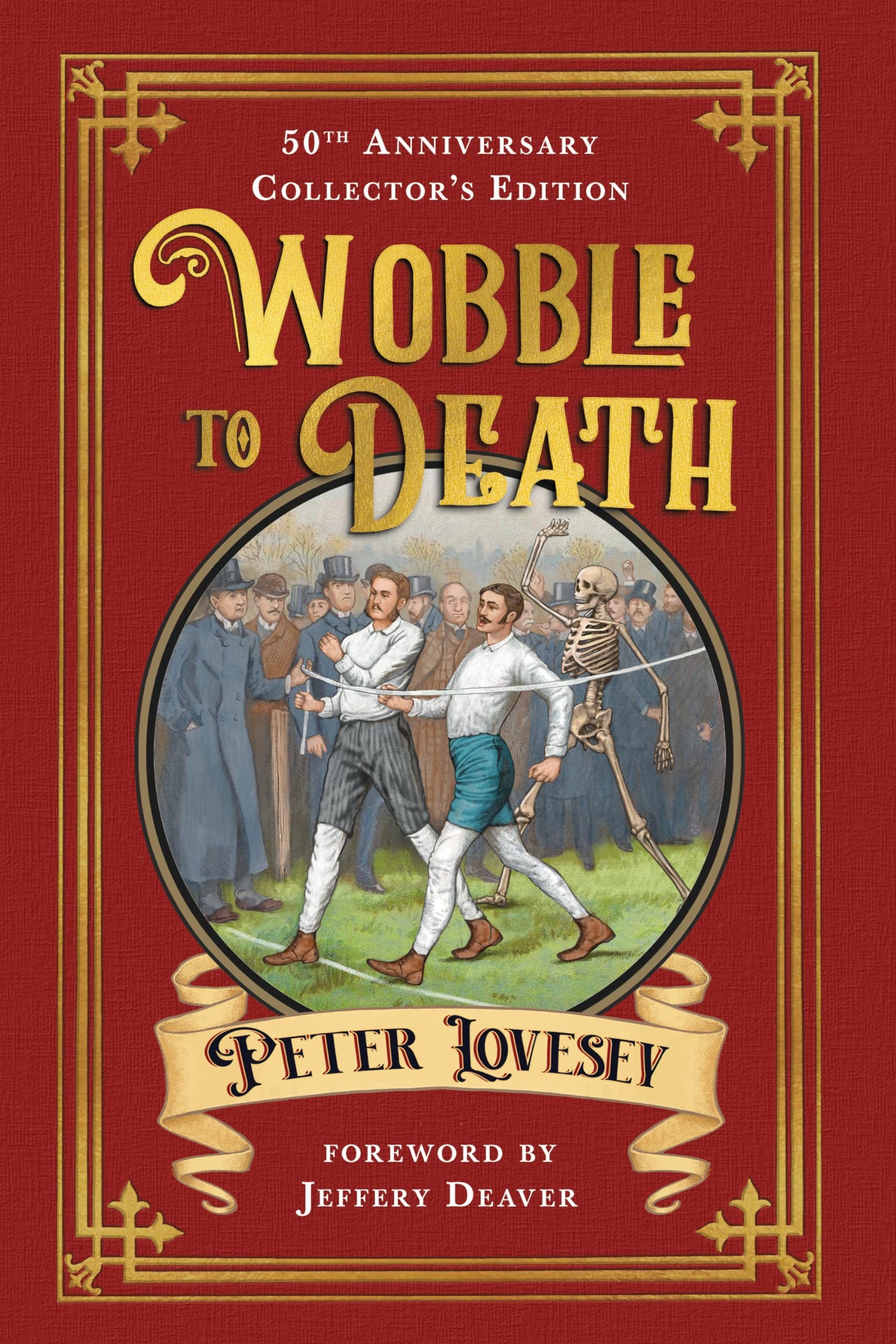
Wobble to Death: Peter Lovesey’s 1970 debut, the Victorian London-set mystery about a race walk (or a “wobble”), a sport I knew nothing about before I read this book. Peter launched his writing career by wining a competition for unpublished mystery writers after seeing an ad in the newspaper.
Bloodhounds: Perhaps Peter’s most decorated novel, a contemporary mystery in his iconic Peter Diamond investigation series, set in Bath. The eponymous Bloodhounds are a crime fiction book club that meets in the evenings in a spooky old church cellar. All the avid readers in the club are called into question when one of their number ends up dead. It’s a book that’s packed with homage to the genre, which Lovesey somehow pulls off without any plot spoilers.
This whole series is lovely fun—spoken as someone who got to edit 12 of these novels. Diamond is the chief superintendent of the Avon and Somerset Murder Squad, and he’s an irascible luddite with no patience for bureaucratic procedure or detectives who rely on technology instead of shoe leather, inquisitiveness, and keen thinking.
Thanks for letting me share this.
Happy reading.
Juliet